British Fell Relays 2025

SATURDAY 18 OCTOBER

0430: Alarm goes off. Unusually easy to roll out of bed, given the hour.

0545: On the road from Bradford.

0930: Roll into the parking field a quarter of a mile past Penantigi Isaf farm on the A470, 10 miles west of Dolgellau, mid Wales. It’s a big field in the middle of nowhere in mid-October, which can only mean it’s the British Fell Relays. A gathering of the clan where we do our mad fellrunning thing without (hopefully) bothering anyone else. I pay my £10 parking fee and get a relatively flat spot on firm-ish ground, a relief. Load up a rucksack of gear for the day and also grab a camping chair, which may come in useful later. Immediately notice the high, steep mountains to both sides of the valley. Vehicles are now arriving thick and fast, here in this otherwise undisturbed spot, and soon there are hundreds of cars on the field and a mini-army of fellrunners advancing to the start.

1000: Arrive at the North Leeds Fell Runners (NLFR) club tent, after a 10 minute walk which includes a narrow, muddy tunnel under the road. Seemingly miraculously, as if having popped up out of thin air 140 miles from home, 20 other NLFRs are already milling about (we have 3 teams entered), let alone loads of other familiar faces from dozens of other clubs. The multi-coloured tented village is up and running, the banter starts and the cheerful bilingual announcer reminds us we are in the heart of Wales. Before you know it, the Leg 1 runners are going through the kit check tent and into the starting pen.

Tented village and finish, with some gentle slopes beyond

1100: I’m on (navigational) Leg 3 of the men’s open team (we also have women’s open and V50 teams). On Leg 1 my team has Tom B, this year’s BOFRA Championship winner, and the Leg 1 route looks similar to a BOFRA course, only even steeper and longer. Josh and Phil on Leg 2 are primed for an early handover. 190 runners are underway on the 11am mass start with Tom near the front. In fact he makes it to the top in 3rd place and is back in 32 minutes, just 2 minutes behind the first runner. From the handover, Josh and Phil now have a very different leg, about twice as long, so it’s more uncertain for us on Leg 3 to predict when to be ready.

1200: I decide to sort-of start getting ready and wonder why my shoes don’t feel very tight. Closer examination reveals the soles mostly departing from the uppers, don’t ask me how I hadn’t noticed earlier. Decide there is time to jog back to the car to get a spare pair; I have a graveyard of various old running shoes kept permanently in the boot. After trying several pairs, I realise none are in better condition than the original. So it’s time for Plan C – the Pete Bland van. Fortunately it’s here, has a pair of size 12 wide-fit Mudtalons, and reception for the card machine. 80 quid, fair enough, you’re going to need a new pair before long anyway…

1230: The first Leg 2 runners come in and hand over to their Leg 3 counterparts. On Leg 3, you don’t know where you’re going until someone gives you a map 5 minutes in. Speculation on the field was that it would be on the other side of the road, and indeed we can see the nav pairs run through the muddy tunnel and up the hill beyond.  

1245: The worst thing you can possibly do on a relay is not be there for the handover when the previous leg runners come in, so Will and I on Leg 3 go through kit check and into the holding area. So, just have to stay warm somehow until Josh and Phil come in, which could be any time from now. Will seems very relaxed, which I’m pleased about because he’s had the unenvious job of pulling the team together, including having to find two last-minute replacements (of which I’m one). We jog about a bit while trying to keep an eye on the Leg 2 pairs arriving. They all look like Josh and Phil from a distance… until eventually Phil’s distinctive red shorts come into view and we’re ready to go.

Warm up area looking cloud-wards

1315: Will and I are underway, through the tunnel and shortly after handed a map each, showing 9 checkpoints to visit in order. However, conditions are clear and we’re midway through the pack, so other pairs are strung out in front of us. The nav is thus no problem; instead, I get to concentrate on the running side of things. Namely that Will is much faster than me, it’s a lot of uphill (or contouring) and conditions underfoot are very rough (heather, tussocks and bog). It feels very hard and unremitting and apart from dibbing the checkpoints I don’t get any kind of breather.

1415: After what seems like an eternity Will and I get to the penultimate checkpoint on what must be the final hill. Downhill all the way from here, surely. The descent includes our one small bit of nav, contouring round a final bump rather than going over, which I’m extremely grateful for. We belt it down through the final fields, into the muddy tunnel and…. then the sting in the tail. Rather than running straight into the handover area, we have to do a lap of the field. This includes a miniscule climb, but it feels the worst of all. As we eventually go through the finish my legs turn to jelly and I wobble through the dibbing area and back to the tent. Can’t remember the last time I pushed so hard for so long, 1hr 23 minutes as it turned out.

1430: We handed over to Tom S on Leg 4, which is similar to Leg 1, but my thoughts are focused on collapsing into the camping chair, thank goodness I bought it. Niamh then informs me about some showers on site and that seems like a good idea, so after a bit more rest I find these and it really was a good idea. Refreshed, I think about some food but the queue is snaking round the field and anyway I can’t find my meal ticket (which I’d thoughtfully removed from my race number earlier). So it’s back to the club tent for snacking, cheering in the Leg 4 guys, taking photos and generally recounting and recovering. Will looks like he’s barely broken sweat.
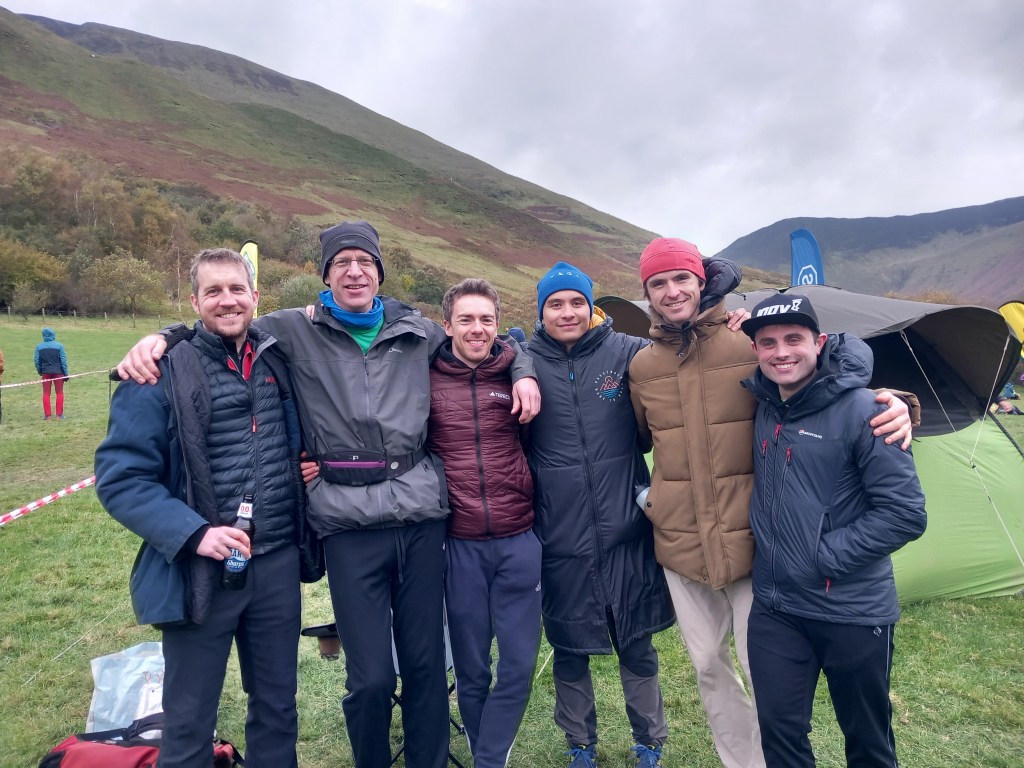
NLFR men’s open team jacket models – Josh, Dave, Tom B, Phil, Will, Tom S

1630: All three teams are successfully round, a great club effort given the tough terrain and distance from home. We start noticing the cold, the tent comes down and the trudge off the field begins along with everyone else. It’s taken the host club, Merionnydd, 12 months to organise this gig, and most of us have only been on the field for 6 hours.

1730: Arrive at our accommodation for the evening, 20 minutes drive along the road, a further 10 minutes up a long winding track. There is parking for 2 cars, but by some significant error in car sharing there are in fact 7 cars, for 9 people. And no turning space. Somehow, we all find a spot, and organise 2 cars in such a way that we can easily drive off to the pub in the dark later.

The environmental sub-committee meet to discuss the club car sharing policy

The Airbnb is somewhere between a bunkbarn and a fancy conversion, with distinctive features like a woodburner, a sunken bath, a raised outdoor platform and a gigantic historic map of Machynlleth. But all thoughts are turning to the pub…..
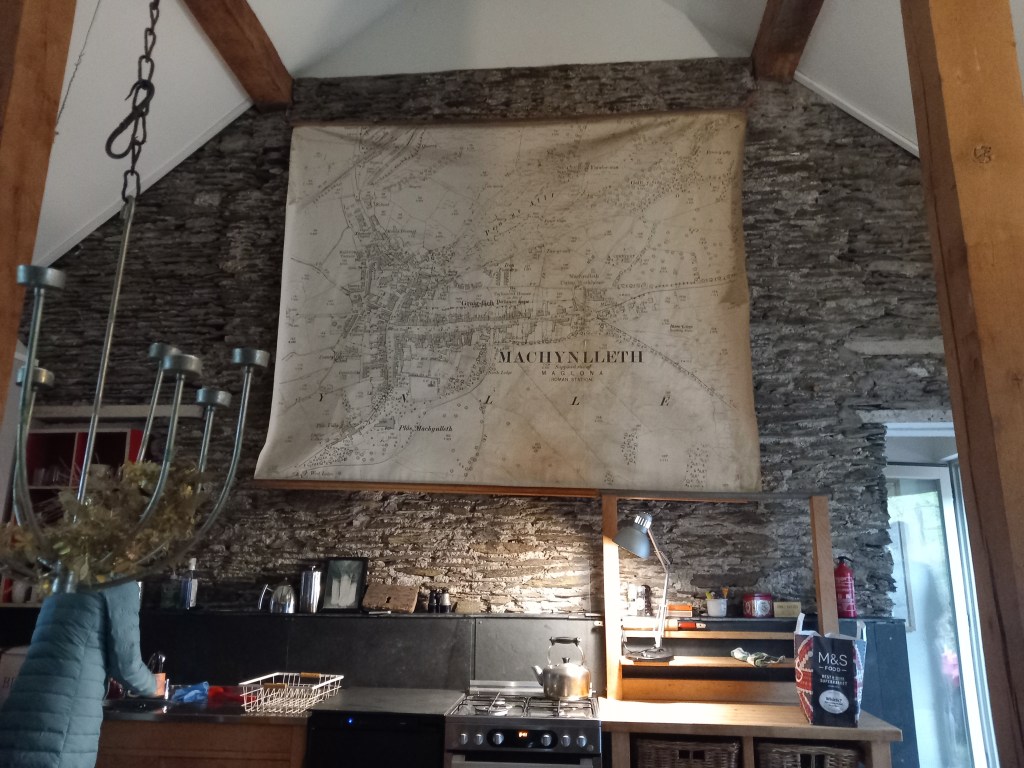
No central heating but it does have a giant map

1900: Arrive at The Brigands Inn, Mallwyd, where we are booked for dinner. Thank goodness I ordered 3 courses in advance, I’ve not had a square meal all day. All 20 of us are put in a side room out of everyone else’s way, the service and food are excellent and it’s a great way to end the day. Thank you Brigands.

1030: Arrive back at the Airbnb. As a late addition to the booking I don’t get a bed, or a sofa, but after a day like that a bit of floor for mat and sleeping bag is more than adequate. Fell Relays day is always like two days in one!

Full results

Many thanks to Merionnydd Running Club for hosting the event, and the many members of NLFR who organised this brilliant club weekend trip.
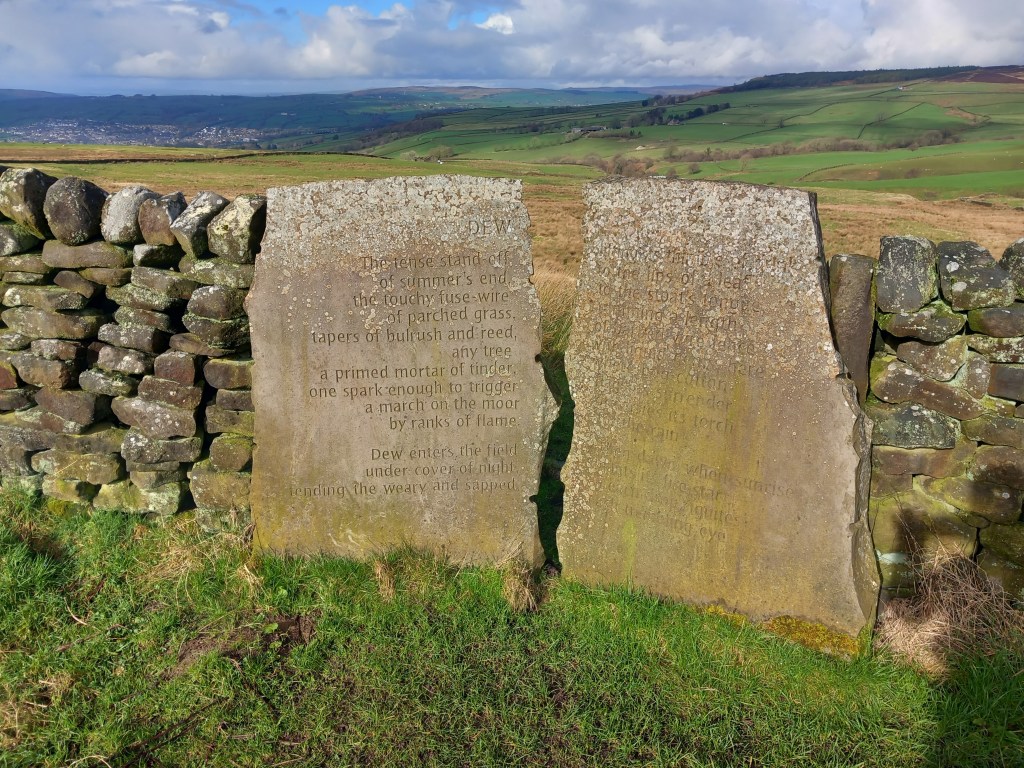
Poetry in Motion

Linking the Stanza Stones in one continuous journey

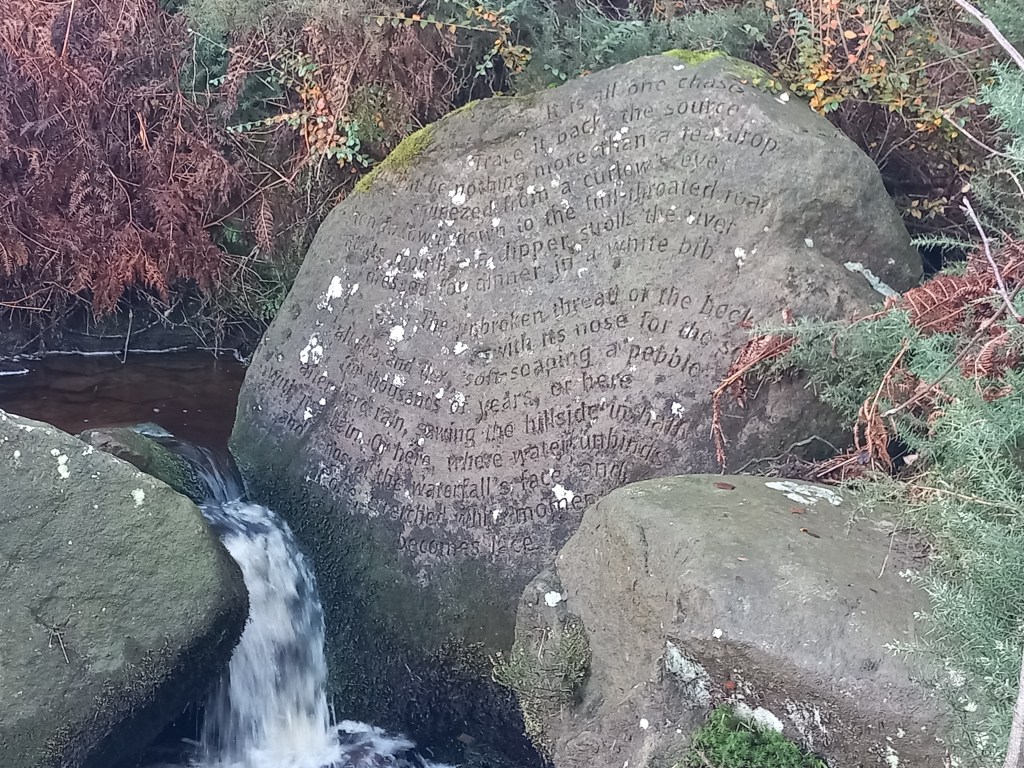
Over the last few weeks I’ve been filling in the pieces of an outdoor jigsaw puzzle. Namely, visiting all of the so-called “Stanza Stones”, six poems by Poet Laureate Simon Armitage carved into rock on the South Pennine Moors. The stones are located between Marsden (where Simon grew up) and Ilkley (Ilkley Literature Festival originally sponsored the project). Each poem is based on water in its various physical states – Snow, Rain, Mist, Dew, Puddle and Beck – and there’s plenty of all up here at this time of year. The rocks themselves are variously quarry walls, existing crags and boulders, as well as stones transported to site. Some are very prominent, others more difficult to locate. It’s been like a mini-treasure hunt tracking them all down, but eventually I found all six:

Dew
Mist
Rain
Beck
Puddle
Snow

There’s much to take in here – the poems themselves, their placing, the use of materials, the style of carving, how they all relate to the landscape/local area etc – all of which are potentially quite thought-provoking. However I will focus now on one specific aspect, namely the various ways in which you could link all six in one continuous journey.

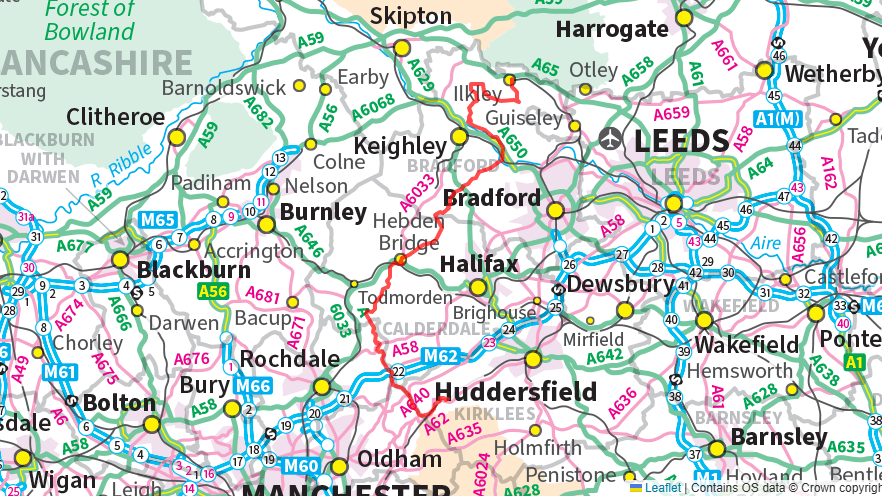
As the crow flies (according to freemaptools.com) it’s 23 miles from Marsden to Ilkley, both of which are served by train stations, so immediately the idea of a route between them via the Stanza Stones seems possible. In fact, there are already three published routes that do just that:

Firstly, there is the original “official” route published by Ilkley Literature Festival, 47 miles in total (so obviously it must wind about a bit). It follows the Pennine Way to Hebden Bridge, then cuts north east to Bingley before a circuitous route around Rombald’s Moor to Ilkley.

An alternative Stanza Stones Walk has also been published by Mick Melvin, building on the literary theme by visiting Mytholmroyd and Haworth as well, homes of Ted Hughes and the Brontes respectively. This route adds a few miles to the original so it’s nearer 50 miles in total.

Lastly, there is now a Stanza Stones 50 mile Ultra, first organised by CraggRunner in 2023 and set for its third running on Saturday 7 June 2025. This route combines elements of the previous two with 5 checkpoints. With a 9am start you have 24 hours to complete the 50 miles with 6800ft of ascent. Entry is available here for £58-£70, minimum age 20 years.

Of course you don’t have to follow published routes, and it would be fun to come up with individual variations. If the straight-line distance beginning to end is 23 miles there must be scope to shave a bit off 47-50 miles! I quite like devising running routes with a loose “theme” of sorts, so if I come up with a good alternative of my own I will share it here.

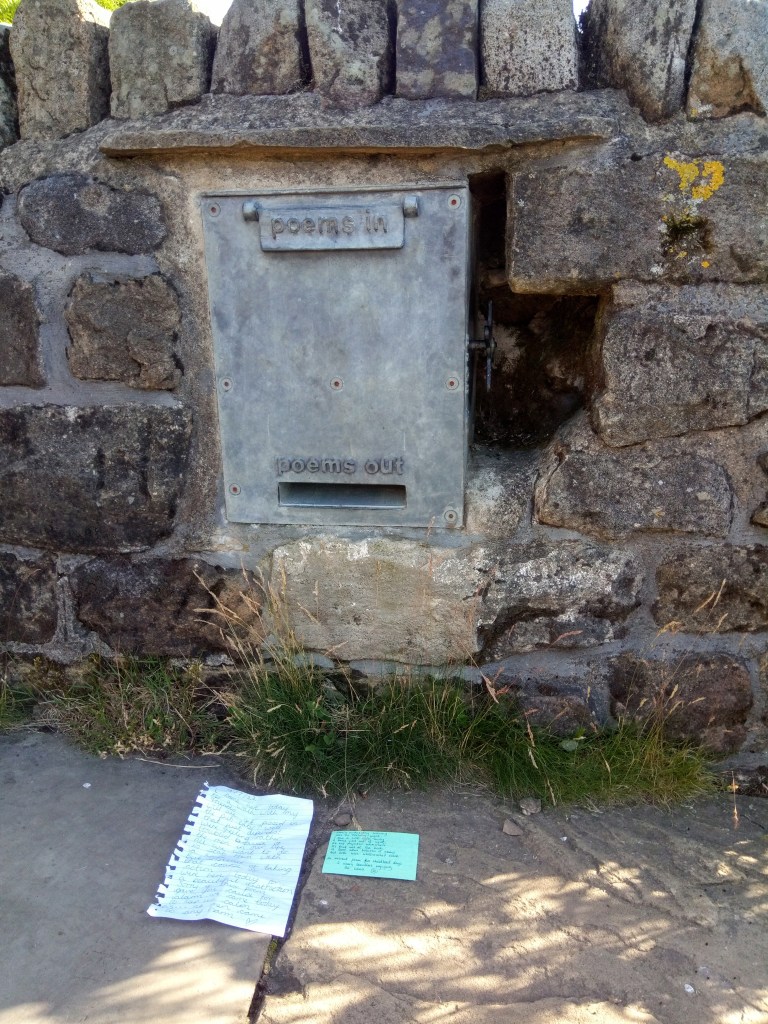
As an added bonus, between the Puddle and Beck Stones on Ilkley Moor you pass the Stanza Stones Poetry Seat at Gill Head, colloquially known as Poetry Corner. Here you can contribute poems of your own by posting them in the postbox-like “Poetry Box”, and with a crank of the handle reaveal others previously-contributed. You get a nice mix of stuff in here, mostly funny or a bit rude, it’s all good fun. Here’s a couple I’ve liked previously:

More information about the Stanza Stones project, including the poems themselves, can be found here. My favourite is “Rain”, quite possibly because it was hoofing it down when I visited, freshwater tears indeed…

Be glad of these freshwater tears,
Each pearled droplet some salty old sea-bullet
Air-lifted out of the waves, then laundered and sieved, recast as a soft bead and returned.
And no matter how much it strafes or sheets, it is no mean feat to catch one raindrop clean in the mouth,
To take one drop on the tongue, tasting cloud pollen, grain of the heavens, raw sky.
Let it teem, up here where the front of the mind distils the brunt of the world.


The average fellrunner’s guide to Borrowdale

There are two ways of looking at the Borrowdale Fell Race. One is to say this is a very difficult race, in an extreme environment, so unless you’re super good you frankly shouldn’t be bothering with it (how long can you reasonably expect marshals to wait at the top of Dale Head for you?). The other is to look at the two cut-off times – 3 hours 20 minutes at Sty Head, 4 hours 30 minutes at Honister – and if you think you can hit them, then it’s a challenge you’re entitled to take on. At present, I’m in the latter category, and despite my obvious limitations as a long-distance fellrunner I recently completed my fourth race out of four attempts (2019, 22, 23, 24). So here are 10 tips from my experience to encourage other run-of-the-mill fellrunners, who may be intimidated by the prospect, to give Borrowdale a go.

  • Make it the focus of your summer:

The race is always the first Saturday in August, which gives you a few months of summer to build up to it. I did my first longer run in the Lakes this year at the Fairfield Horseshoe (AM) in May, moved up to the Buttermere Horseshoe short course (AL) in June, then a long run in the Dales in mid-July.

  • Recce the course:

I was lucky enough to spend the summer of 2019 in Borrowdale so was able to become familiar with the route. I didn’t enter that first time until I’d fully recce’d the course within the cut-offs. So much can be gained from learning the course – terrain, navigation, lines, water fill-ups etc, and just knowing what you’re letting yourself in for. Be particularly wary of the risk of visiting Base Brown when traversing around Green Gable, an easy trap in mist.

  • Train rough and long:

At 17 miles with 2000m of ascent obviously you need endurance, but perhaps more importantly at Borrowdale is the ability to run on rough ground, because that’s what you get the whole way round. Keep to the fells in the build-up, the rougher the better.

  • Plan it around the cut-offs:

I mentioned the 2 cut-offs earlier, miss them and you’ll be directed back to the finish and be DNF’d in the results. The key is to pace things so that you’re comfortably within the cut-offs, so you’re not worrying about them and to give you flexibility in the event of the unexpected. This year I hit Sty Head in 2:48, Honister 4:00, about right. Once through Honister, you can tackle Dale Head in whatever time you wish!

  • Break it down into 8:

The race has 8 checkpoints you have to dib and your splits are presented in the results. I find this quite useful in terms of visualising the race, breaking it down into 8 individual sections, each of which is its own mini-challenge:

1: Start to Bessyboot – flat initially then steep climb

2: to Esk Hause – lengthy undulating trods

3: to Scafell Pike – gradual climb, increasingly rough including boulder-hopping

4: to Sty Head – initial steep scree descent, then descent along/to side of Corridor Route

5: to Great Gable – steep climb

6: to Honister – undulating descent on rough ground

7: to Dale Head – steep climb

8: to finish – steep descent on rough ground

  • Take it easy the days before:

In my mind, the only things running can really do for you in the days before a big race is get you knackered or injured. This year on the day before I took the day off work, watched the Olympics and got my stuff together, ideal.

  • Get there early:

Start time in Rosthwaite is always 11am, it’s nice to arrive early to get your number and gear sorted and, more importantly, get some decent banter in with anyone you know, which I find really relaxing – takes your mind off what’s ahead!

  • Start slowly:

Within 200 metres of the start you’re faced with a major bottleneck where the course joins the Cumbria Way. So start slowly, let the fast runners go through, and accept the 2-minute “delay”. It’s actually a blessing in disguise, slows you down when the adrenaline may be running high.

  • Be ready for changes mid race:

The sun may be shining when you set off, but it can all be very different on the summit of the Pike 2 hours later! Obviously you have to take minimum FRA kit but be prepared for rough conditions, the need to navigate etc. This year I set my compass to the bearing off Great Gable pre-race and indeed needed to use it.

  • Recover after:

The DOMS are likely to be bad so don’t be afraid to sit in the river after or do a gentle recovery walk/”run” the following day. And reflect on how it all went, this may increase your chances of coming back to do it all again in following years!

My Borrowdale times (so far):

  • 2019: 4 hours 19 minutes
  • 2022: 4:22
  • 2023: 5:23
  • 2024: 5:07
Climbing Great Gable, 2023. Photo: Grand Day Out Photography

Stanbury Splash

I’m a bit of a fairweather fellrunner to be honest, preferring spring, summer & autumn races to the harsh stuff over the winter. If there’s one exception it’s the Stanbury Splash, a mid-January mini-adventure over the Haworth moors to and from Penistone Hill. 6 miles in total with plenty of exciting descents and 4 stream crossings – hence its name.

This year’s “Splash” on Sunday was the first of the “new era” of Penistone Hill races – the legendary Woodentops having now passed the baton on to Wharfedale Harriers – but it seemed a pretty seamless handover. As usual, I got there early, as delays with parking, registration and kit selection can happen. Note to self – in January, print out the universal race entry form and fill it in at home, rather than attempting to fill it in on the day with freezing cold hands! And predictably I changed my mind 3 times about what combination of kit I was taking, eventually plumping (rather cautiously, although it was very cold) for a lightweight breathable walking jacket. I found this worked well – I didn’t overheat during the race – and I wasn’t too put out that many had just opted for a running vest. A different breed!

At least with the Penistone Hill races you’re starting at the top of the hill, so you get a pretty good idea of what conditions will be like throughout the race. The flip side of this is that you often get a good descent towards the start of the race, and an agonising climb back up at the end. But it does provide a good spectacle, and the view from the Back Lane car park of 300 runners charging down the hill towards Sladen Beck is a memorable one – almost reminiscent of a medieval battle scene!

After that initial down and up you do a full loop of Ponden Kirk before repeating the first mile and a half in reverse on the return. Conditions were certainly kinder than last year, which was all freezing rain and swollen streams – this time the “splashes” were no barrier and I got round 10 minutes quicker than in 2017. The sight of the finish line on the cricket pitch –  with the tea urn and pile of broken biscuits – always very welcome!

So many thanks to Wharfedale Harriers, the Woodentops, and to all the supporters on the day, including everyone that took photos and clips and generously shared them so we can relive it all again from the comfort of home. See you next January.

DSC03945

Why Burnsall is a classic

Just back from running today’s Burnsall Classic Fell Race – a brilliant event and the “classic” tag well-earned.

I’ve blogged before about Burnsall’s renowned history and records, but what stood out today for me were two things. Firstly, the particularly good atmosphere and friendly banter between runners before and after the race. I got chatting to a couple of lads while recce-ing the course beforehand who were only too willing to share their route-choosing tips and reminiscences of previous races. Eg, we decided that keeping to the left of the tree straight after the wall on the descent was the best bet – I think this was proved correct! Good to give the “lower” half of the race a proper recce on the day as strictly-speaking it’s out-of-bounds the rest of the year.

Secondly, loads of chat at the finish line about just how good a course it is, and I have to agree. It’s got a bit of everything squeezed into its 1.8 miles. The initial runnable climb, the steeper bit near the top where you have to walk, a proper wade through heather, the awkwardly steep (and today, slippery!) initial descent, the wall to hurdle and then the exhilarating rush down to the finish. And only 50 yards of road at the beginning and end (albeit with loads of spectators!). It’s like all the best bits of fellrunning neatly packaged into 20 or so minutes.

You can toy with a few tactics too, although probably more of an issue for better runners than me. I made a daft effort to get ahead of a few just before the wall on the climb – knowing the difficulty of overtaking from then on – and almost came to a complete stop straight after and lost all the places again! Further on, some near me on the descent tried their luck on the heather rather than the path – not sure it worked for them though.

So overall, great day, sure I’ll be back next year, and many thanks to all the organisers and volunteers that make it happen.

DSC03741


2 minutes 42 seconds of fame

Fellrunning’s enduring legend – the most famous and extraordinary individual performance in the history of the sport – is Ernest Dalzell’s descent in the Burnsall Fell Race of 1910. 2 minutes 42 seconds of tumbling, whirlwind descent from the top of Burnsall Fell to the finish line in the village. In the 107 years since, no one else has got within a minute of it (see previous blog)*.

Of course, the scale of the record just fuels the legend, as many have doubted the time. How can we trust a handful of eyewitness accounts from so long ago? I’ve been a bit of a doubter myself – my own best descent time in the race is about 6 minutes – flat out. How could it be humanly possible to run a mile, 800ft downhill, in 2.42?

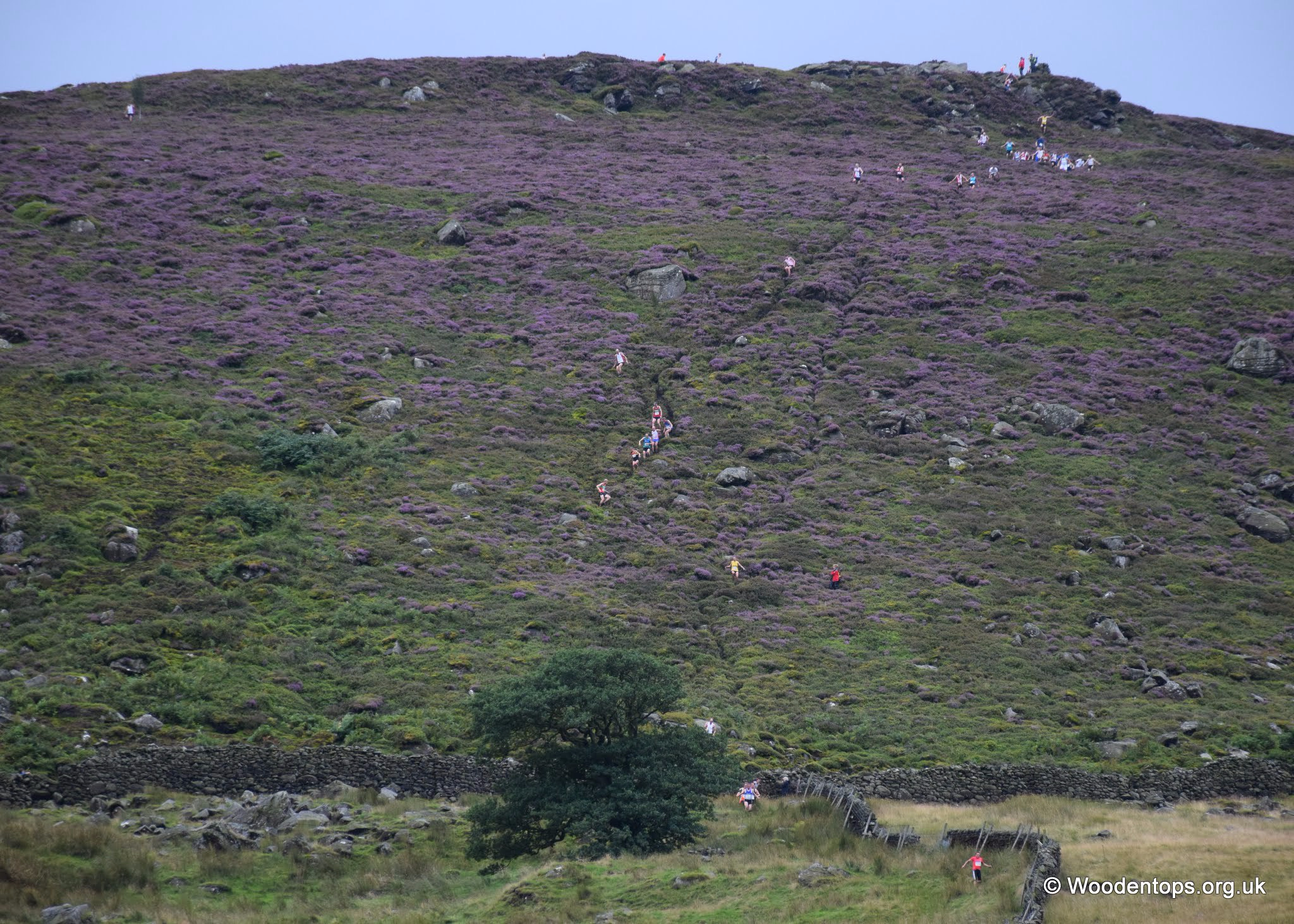
I had this question in mind whilst out on the course earlier this week. Standing by the summit cairn, the village seems just a speck far below, almost as if it would take at least 2.42 to paraglide down, let alone run. Jogging down, there’s only really one route – along a thin, steep path through the thick heather: (photo of last year’s race from woodentops.org.uk)

burnsall descent

If the heather and gradient don’t slow you down enough, the path is worn down to the bedrock, and it’s this combination of steepness, heather and rock that makes progress so painfully slow, and Dalzell’s record seem so improbable.

But crucially, on the day of Dalzell’s record in 1910, the heather had been burned. His race, unusually, took place in September – almost all subsequent races have taken place in August with the heather still thick on the ground.

Further down the fell, just off the main path, I noticed an area where the heather was absent. I had a crack at running down this bit and it was a doddle – springy peaty turf and any rocks clearly visible and easily avoided. I reckon I was two or three times quicker here than on the path. Suddenly, it became a lot easier to envisage Dalzell throwing himself down a bare slope like this with abandon, just picking himself up from various somersaults and carrying on.

I was reminded of a few clips I’ve seen on youtube of that quaint English tradition of cheese rolling. In this annual event, competitors pursue a rolling cheese down Cooper’s Hill just outside Gloucester, a 200 yard-long grassy slope of 1 in 2 – a similar steepness to Burnsall. The fastest pursuers have perfected a technique of propelling themselves downwards by not just running but lying on their backs, rolling, diving forwards – whatever really! – and complete the course in seconds. Dalzell could well have used similar techniques on the bare slopes of Burnsall in 1910.

So, I came away from Burnsall the other day firmly convinced that Dalzell’s descent time was indeed possible, and that it will only ever be beaten if the Duke of Devonshire can one year conveniently burn his heather in time for Burnsall Sports Day.

Looking forward, as ever, to this year’s race on 19 August – you can enter online now


* and Dalzell’s overall time of 12.59 was only broken in 1977.

Mud before the marathon

“This upside-down, inside-out version of running where the streets and roads are just passing distractions in a search for those places where the running is dirty and uneven, where the world’s natural disorder sparkles and rushes, bends and cracks. Running without blinkers on”.

One of my New Year Resolutions this year was to enter the Leeds Half-Marathon. So back in early Jan I filled in the entry form, paid my £34 (!) and the clock is now ticking to May the 14th.

Not that I’m a massive fan of road running, particularly not 13 miles of it. I did some 10ks a few years ago, but generally I prefer to get off the roads and onto the trails and hills. So why the Resolution?

We live pretty much on the Half-Marathon route, and on every second Sunday in May the road is closed for a couple of hours in the morning. So it’s always seemed rather churlish not to stand on the pavement, witness the spectacle of 10,000 people going past and give encouragement. I’ve done this for many years now and each year I’ve felt a bit more like participating, rather than just spectating. Finally, this year, it was time to give it a go.

Version 2It was only after entering that I actually began thinking about what preparing for and running a half-marathon entailed. Conventionally, several weeks of running on the roads in advance. And then the big day itself – 2 hours of plod, plod, plod along the streets (and that’s presuming all goes well). The prospect wasn’t exactly grabbing me.
But I’m glad to say I’ve rediscovered my enthusiasm. For this I have a couple of books to thank (and Leeds Libraries for having them in stock!) – both similarly-titled and on a similar theme: Running Free by Richard Askwith and Run Wild by Boff Whalley.

The key message of both books is simply that running should, more than anything else, be about fun and adventure. Not about watching the clock, shaving seconds off your PB or about doing something you somehow feel you should be doing. Rather, it should just be about enjoyment, the sheer pleasure that comes from getting out there and running about, much as we did as kids.

So, I’m now seeing preparing for the Half-Marathon as an opportunity to return to the kind of running I like doing best – off-road, up and down, through woods, fields, mud and streams. Fortunately, we have a natural playground on our doorstep in Meanwood – the Meanwood Valley – and I’ve been making the most of what the valley has to offer.

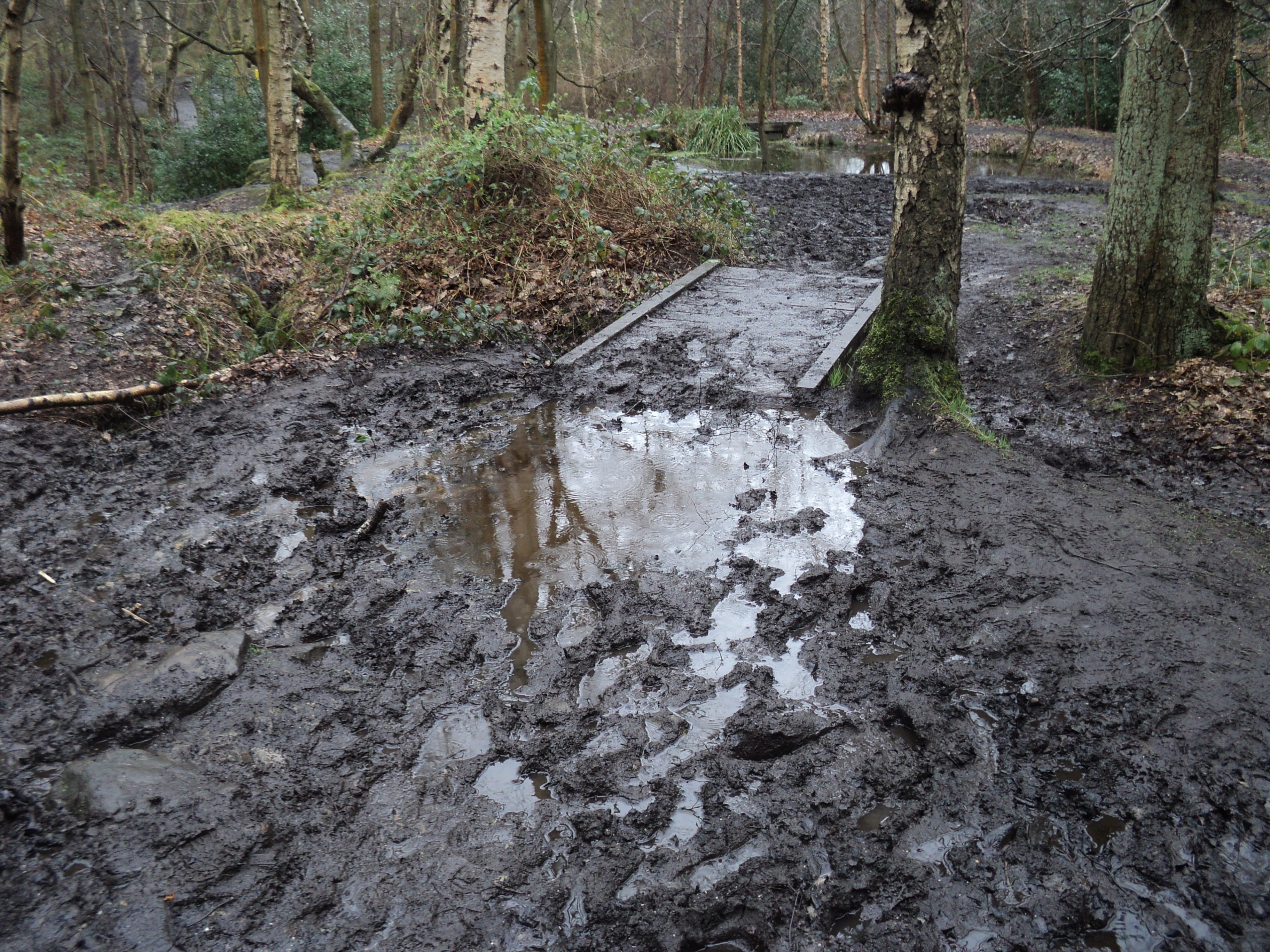
Actually, just recently, it’s been a whole lot of mud, particularly the stretch north of the ring road through Adel Woods. It’s been great not to be put off by the cut-up paths and puddles, if anything to seek them out. In fact, winter muddy running feels like yet another great discovery about the Meanwood Valley. Good job I’ve got an outside tap at home though!

So do take a read of the books if you can. The quote at the top is taken from Ch.31 of Boff’s book, describing a run he took up Meanwood Valley in 1986. I’m glad to say it’s still like that now.

As to 14 May itself, fingers crossed the preparation will allow me to enjoy it the best I can. But already I’ve got a feeling it’s going to be both my first and last half-marathon.

DSC03331


The appeal of grassroots sport

There’s an emerging theme elsewhere on this site about my growing disenchantment with elite sport. While this stems from an ongoing planning battle in Leeds where Green Belt may be sacrificed for the purposes of redeveloping Headingley Stadium, it’s actually a general trend I’ve noticed. Footballers can certainly conjure up great matches, but we’re all aware of the ridiculous salaries. What substances are OK for the endurance athletes – runners, cyclists etc – to take or not to take? And while I understand that the golf at last week’s Ryder Cup was of an exceptional standard, I didn’t see it – the ugly, vulgar crowds put me right off from the start.

This is all particularly the case in Leeds where the City Council appears to have been dazzled by hosting the 2014 Tour de France Grand Depart and now can’t get enough of elite sport. Tour de Yorkshire, Olympic Parade, ITU Triathlon etc. Without fully appreciating that it may come at a cost. For the Triathlon earlier in the summer, we were boxed in our cul-de-sac for half a day so that 30 or so elite men and women could cycle down the main road once – 4 hours of road closure for 4 minutes of action. And now we might not be able to jog around our bit of the Meanwood Valley because they want it to redevelop Headingley – it’s just the latest in a long line…..

Meanwhile, I’ve been very happy to be dipping my toe back into a grassroots sport that I was taking pretty seriously 10 years or so ago – fellrunning. The appeal of this admittedly slightly eccentric sport has already been brilliantly described at length in Richard Askwith’s book “Feet in the Clouds”, which I fully recommend to all. A general theme to take from the book is that there is potentially as much appeal and interest in a local, down-to-earth scene like fellrunning as there is in the self-important and commercialised world of elite sport, which we all pay vast sums to Sky, BT etc to watch.

I was reminded of this the other week, lining up for my first fellrace for several years at Burnsall, in the Yorkshire Dales. Just a quick look round the field of 100 or so, I recognised a few faces, not because I knew them personally but because they are the “stars” of the sport. By stars I mean just very competent at what they do, well known on the circuit, with great results and records behind them. But their reasons for being there are just the same as mine – not for any money or glory, it’s just great fun to do. With the greatest respect to Mo Farah (whom I admire), I’m not likely to ever actually rub shoulders with him on a startline anywhere.

dsc02868

Burnsall was a great race to start again with. An idyllic scene, a race history that goes back to the 19th Century, and a great fellrunning challenge. Basically, you start on the village green, run through a gate and then go up through steep fields to the open fell. At this point the route narrows to a thin track up through the heather to the cairn, 800 feet above the village. When you go for a walk up a hill, one of the things that gets you to the top is the thought of a well-earned rest, a snack and a drink, taking in the view etc. Not with fellrunning. All that effort and within a split second you’re hurtling back down where you’ve come. This is particularly true of Burnsall, where the first half of the descent is so steep you have to put the brakes on to stay on your feet. You then jump a dry-stone wall (which is 6ft high as you approach it, but 9ft down on the other side!) and into the fields. The gradient here is slightly less steep and you can really fly down it, which accounts for the buzz of endorphins that sustain you over the finish line and for long after. Absolutely bloody exhausting, but so worth it.

Elite sport likes its stats but you can get into the stats of fellrunning too. The men’s record at Burnsall is 12.48, set over 30 years ago. Why hasn’t it been broken in all that time? In fact, if you look at the recent winners’ times they’ve actually been getting slower. Could it be that there is a competing event that attracts the top athletes? Is the heather longer now than it used to be? (it can really slow you down, particularly on the descent). Tantalisingly, the race programme reveals that the record ascent time is 8.22, and the record descent is 3.40, meaning that theoretically a 12 minute time is possible!

For me though, I took twice as long. Who cares though? It was just good to be back.

dsc02875